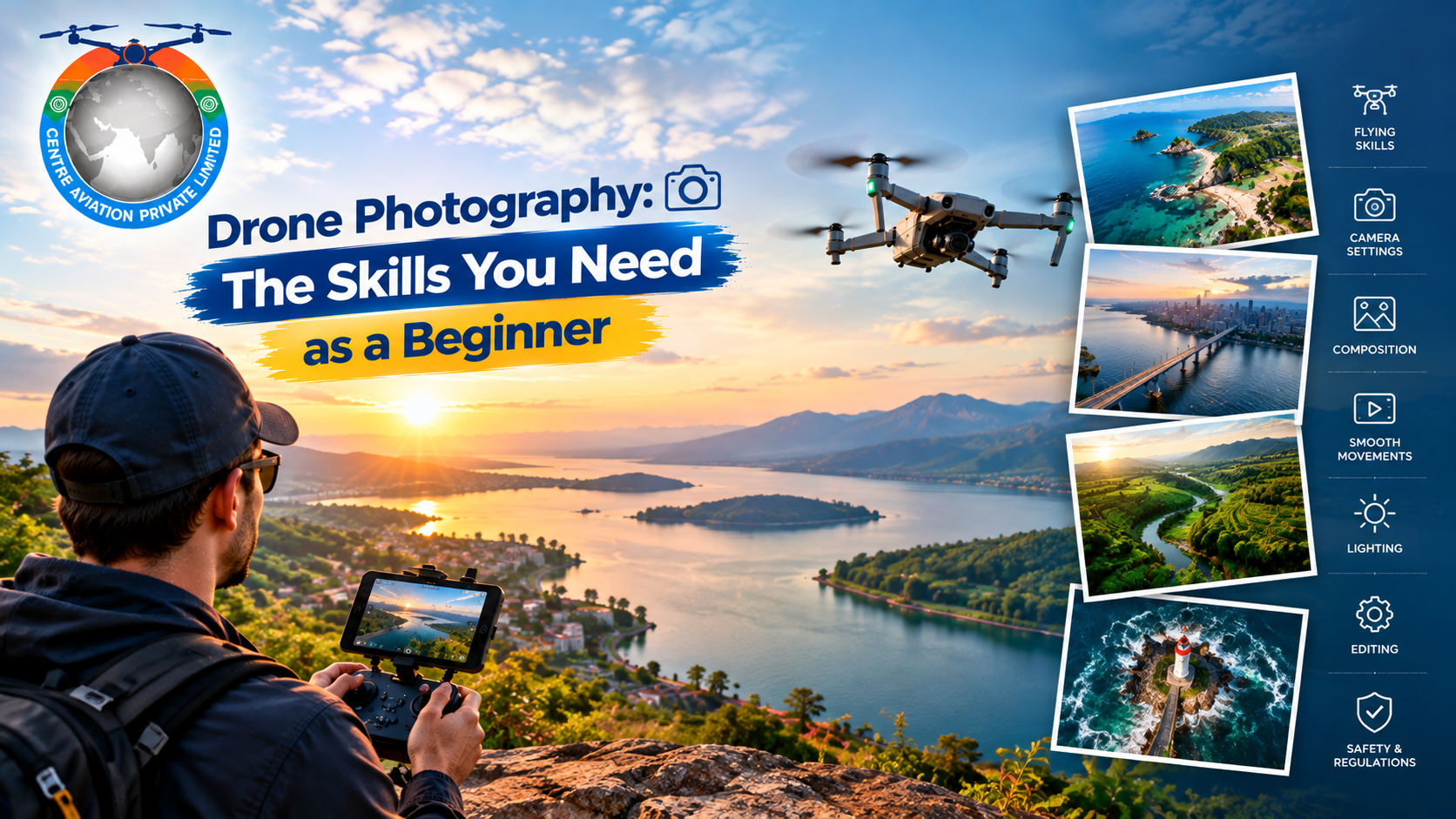
Drone photography has changed the way we capture photos and videos. It enables us to take pictures and video from totally new perspectives, wider angles, and vantage points.
However, having a drone does not necessarily mean you are a good aerial photographer.
To ensure good and attractive photos and videos that can capture your imagination, you need to learn various aerial photography skills and be patient with yourself in the process.
If you are a complete beginner, the following tips will surely help you master the art of drone photography.
1. Learn the Basics of Drone Flying
Before mastering aerial photography skills, a novice drone pilot must be able to master the essentials of drone flying.
First, you should understand how to control a drone and familiarize yourself with basic maneuvers like backward and forward, sideways, up, and down.
Second, learn how a drone responds to wind gusts and obstacles in its flight path.
It is a good idea to learn how to fly a drone in an open field before progressing to tree-lined and more complex areas.
Safe and controlled drone flying is paramount before mastering how to take good aerial photographs and videos. With good drone flying skills, you can focus on the art of aerial photography rather than constantly worrying about avoiding trees and buildings.
2. Learn About Camera Settings
Modern camera drones offer multiple settings that can affect the outcome of your photos and videos. As a complete beginner in aerial photography, you need to spend time learning about the different camera settings like ISO, shutter speed, aperture, and white balance.
You should not try to master all the camera settings at once. Instead, spend time learning how each setting affects the outcome of your photos and videos.
Once you understand the strengths and weaknesses of the various camera settings, you can learn how to use them to take good aerial photographs and videos.
3. Learn About Composition
Composition is one of the fundamental skills of aerial photography. With a drone, you can capture compelling images from various unique angles not available to traditional ground-based photographers.
As a beginner drone pilot, it is essential to always experiment with different compositions.
For example, you can always capture images of roads, buildings, rivers, fields, coastlines, and so on from different heights and angles.
One of the easiest ways to experiment with different aerial compositions is to use the rule of thirds. The rule of thirds states that the most pleasing composition is achieved when the horizon lines and objects in the scene are placed along the imaginary lines that divide an image into thirds, both horizontally and vertically.
You can also capture images using a symmetrical composition, leading lines, patterns, and negative space. Remember that small changes in the drone’s angle can have profound effects on the outcome of your photos.
4. Practice Smooth Movements for Amazing Drone Videos
Smooth drone movements are crucial in achieving good video content. As a novice aerial videographer, it is essential to always practice slow and smooth camera movements.
Avoid making sudden movements like pulling up or rolling the drone to change direction. Smooth and slow aerial movements always result in excellent videos.
You should spend time practicing various slow movements like moving forward while looking at an object, side movements, and slow orbit movements over an object or landscape.
With enough practice, you will be able to execute these movements with ease and capture amazing drone videos.
5. Always Consider Lighting Conditions
Lighting can play a critical role in determining the outcome of your aerial photographs. Most photographers prefer to shoot during the golden hour because of the favorable lighting conditions.
The golden hour usually occurs early in the morning and just before sunset. During this time of day, photographers can capture more dramatic images with longer shadows.
However, the lighting conditions can vary depending on the time of year and the location. As a novice aerial photographer, you need to spend time experimenting with taking photos at different times of the day.
You should always consider the time of day and the lighting conditions before taking photographs. In addition, you should also be on the lookout for harsh sunlight, glare, shadows, and cloudy weather.
6. Learn How to Plan Your Shots
Great aerial photography almost always requires shot planning. Before launching your drone and taking photographs, it is essential to think through the shots you want to capture and how you want them framed.
Shot planning will enable you to get the most out of your drone battery while also capturing the best images possible. As a novice drone pilot, you should always plan your shots to ensure you use the time and equipment at your disposal wisely.
One of the easiest ways to start shot planning is by developing a shot list, mostly if you are doing professional drone photography. Shot listing helps you capture all the necessary shots for your project, including property photos, videos for tourism websites, and so on.
7. Master Photo and Video Editing Skills
Although capturing raw images and videos using a drone is important, photo and video editing can help elevate your content to the next level.
Beginner aerial photographers should spend time learning how to crop, enhance, and edit photos using photo-editing software.
As a drone videographer, you should also invest time in learning how to cut and paste videos, as well as edit and enhance your videos using video-editing software.
You should always strive for minimal editing in photo and video editing.
8. Learn Drone Safety and Regulations
As a drone pilot, it is always essential to prioritize drone safety. Before flying your drone and capturing photographs, always ensure you understand the local drone laws and regulations in your area.
You should also consider the weather and the best time to fly your drone to take photographs.
If you are a professional or want to pursue a career as a drone pilot, it is a good idea to consider professional drone pilot training. Drone Service Technician Course can help aspiring pilots build a solid foundation in the fundamentals of safe and professional drone flying.
Always ensure you maintain situational awareness when flying your drone and avoid flying in unfavorable weather and environments whenever possible.
9. Practice Different Shot Types
Another essential aerial photography skill for beginners is to practice different types of shots.
Novice drone pilots should always experiment with various aerial shot types, including straight-down photography, low-angle shots, photo capture from wide angles, reveal, tracking, and slow orbit shots, among others.
Always spend time studying the photos you take using a drone to ensure you keep getting better with every picture. You will be surprised at how much practice you need to perfect different shots.
10. Keep Learning Drone Photography Skills
Drone photography involves multiple skill sets, including drone flying, photography, videography, shot listing, and photo and video editing.
Although it may seem quite involved, a beginner drone pilot can perfect aerial photography one step at a time.
Start by learning the essential drone flying skills like forward and backward flying, sideways, up and down, and practicing drone movements. Once you perfect the basics, you can consider learning more advanced aerial photography skills.
If you are keen on pursuing a career in drone photography, Advanced Drone Training India offers a solid foundation in professional drone photography.
However, it is always a good idea to get involved in hands-on practice to gain more practical knowledge on how your drone behaves under different conditions.
What Are the Benefits of Professional Drone Training for Novice Drone Pilots?
Although it is entirely possible for beginner drone pilots to teach themselves the various drone skills, professional drone training can help them avoid the common pitfalls associated with self-learning.
Professional training will equip novice drone pilots with hands-on experience on various aspects of drone technology, including drone safety, flying, photography, and video capture, as well as equipment handling.
If you are a student or a novice drone pilot considering studying aircraft design, the Drone Aeromodelling Course in Gurgaon can help you get a thorough understanding of aircraft design, elements, and flight, as well as practical model building and aeromodelling.
This course can greatly enhance your knowledge of drone technology and improve your drone photography potential.
Final Thoughts
Drone photography is a skill that requires lots of practice to master. A good aerial photographer understands drone flying, photography and editing, lighting and composition, smooth movements, and shot planning.
As a novice drone pilot, you should consider learning these skills one step at a time. In the meantime, keep practicing with your drone to get better aerial photographs.
Tras Aviation focuses on providing excellent learning experiences to aspiring drone pilots. By combining these valuable skills with tons of experience, you too can become an expert in aerial photography.
Frequently Asked Questions (FAQs)
1. Is drone photography hard?
Drone photography is relatively easy to learn as long as a novice drone pilot is always willing to practice and improve on their skills.
2. What skills do I need for drone photography?
Some of the key skills needed for drone photography include drone flying, camera controls, composition, lighting, smooth movements, shot listing, and photo and video editing.
3. Can I learn to take aerial photographs without professional drone training?
Yes, it is quite possible to be a self-taught aerial photographer. However, professional drone training can enable a novice drone pilot to gain a wealth of practical experience in taking aerial photographs and videos.
4. What are the essential camera controls?
The essential camera controls include ISO, shutter speed, aperture, and white balance.
5. What is the best time to take aerial photographs?
The best time to take aerial photographs is usually during the golden hour. The golden hour occurs early in the morning and just before sunset.
However, the lighting also varies with seasons and location. As such, novice aerial photographers should spend time taking photos at different times of the day.
6. Can I capture smooth drone videos?
Yes, you can capture smooth aerial videos as long as you practice mastering slow and smooth drone and camera movements.
Avoid making sudden movements as much as possible. You can also combine smooth drone movements with slow camera movements to get excellent aerial videos.
7. Are photo and video editing important in drone photography?
Photo and video editing play a significant role in drone photography and videography. You should spend time learning how to crop, enhance, and edit photos using photo-editing software.
8. Are there drone safety guidelines before taking photographs?
Yes, drone safety is of paramount importance. As a drone pilot, you should study and understand the local drone laws and regulations.
In addition, you should also consider the weather and the best time to fly your drone.
9. Can drone photography be a profession?
Yes, drone photography can easily become a profession as long as a novice drone pilot is always willing to learn and acquire advanced skills in drone photography.
In addition to traditional photography, drones are used in various industries, including agriculture, construction, and filmmaking.
10. Where can novice drone pilots learn more about drones?
Novice drone pilots can always seek professional assistance in gaining more knowledge about drone technology.
Tras Aviation offers various drone training programs that can help improve a pilot’s knowledge and practical skills in drone technology and photography.
- Advanced Drone Training India
- DGCA Drone Pilot Training
- Drone Aeromodelling Course in Gurgaon

Related Posts