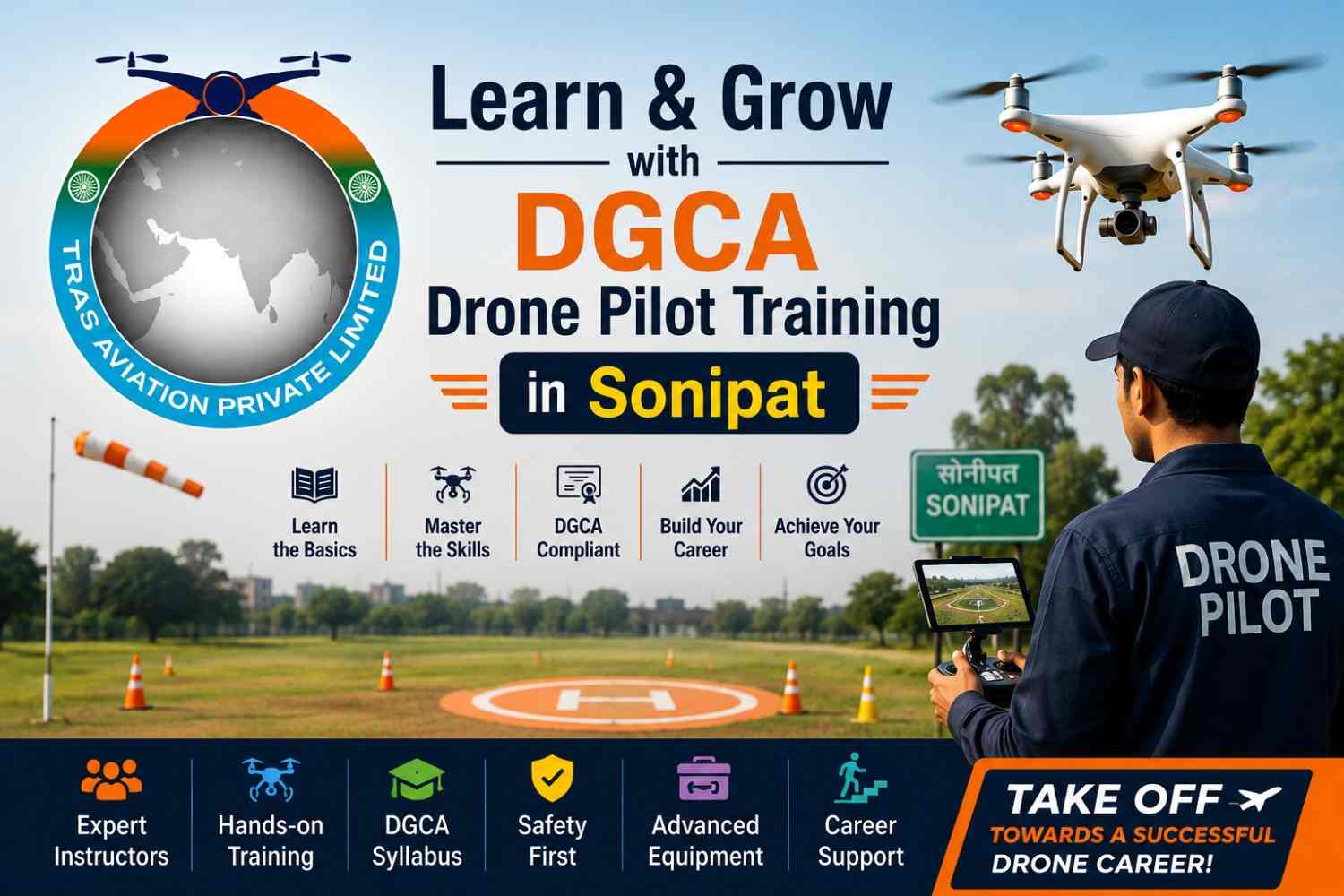
The employment and career possibilities created by the Indian drone industry have been attracting students and working professionals, entrepreneurs, aviation, and photography pros, surveyors, technicians, and technology enthusiasts. Drones have outgrown their recreation and leisure use. Professionally, drones are used in surveying, mapping, agriculture, construction, and many other fields including inspection, photography, monitoring, and transportation.
The growing necessity of drone technology in various sectors has created the need for professionals who can operate, maintain, and oversee the drone technology systems. For individuals wanting to step into the drone industry, substantial training and drone education are prerequisites.
Focused on career drone education in India, TRAS Aviation offers quality and practical oriented drone education. Based on the student’s learning level, the drone education begins with the basics of drone operations and flying regulations, flight safety, and equipment handling and flying. DGCA Drone Pilot Training offers this education to the students in and around Sonipat.
The right drone training program can help participants understand the numerous and upcoming job opportunities offered by the Indian drone industry.
Why Learn Drones in Sonipat?
Sonipat has educational, industrial, residential, and commercial growth. Located in the National Capital Region, it has all the advantages of proximity to a metro. With a focus on technology, it has career opportunities for people.
Many districts around Sonipat and the NCR can make use of drone tech. As an example, construction companies can continue onsite monitoring, surveyors can now collect surveying data, farmers can employ a monitoring service, and journalists can do aerial photography and reporting.
While it is simple to master drone flying, starting a legitimate drone-based service is not as simple as purchasing a drone, practicing, and then using the controller.
Commercial operators need to have both theoretical and practical knowledge about all of the different aspects of flying drones, including:
Components
Controls
Pre flight
Safety
Airspace
Weather
Batteries
Emergencies
Planning
Inspections
Procedures
Post flight
To have the first level of operational drone flying proficiency, you must know all of these aspects.
What is DGCA drone pilot training?
DGCA drone pilot training is the formal means of learning how to become a licensed drone operator within certain defined boundaries.
The training covers a variety of topics, such as regulations, airspace, flight, weather, basic equipment, risks, emergencies, what can be taken, and how to control the drone.
Learners must also know what happens in all three phases of the flight, which includes preparation, assessment, and control of the environment.
Thus, training must include theory and practice combined.
Who should consider drone training?
Drone training is designed for all levels of people, regardless of educational and professional backgrounds. Basic principles can be taught to novices, while professionals can learn to skillfully operate in a drone career.
Benefits of Drone Training Include:
Working in Aviation Technology
Photography / Video Services
Surveying
Drone Construction
Ag Tech
Business
Technically Skilled Work
Hobbyist
Current Users
Those Anticipating Starting a Drone Business
Before even considering a training program, a perspective user should assess all regulatory requirements that govern their drone training.
What Do You Learn From Drone Pilot Training?
A high-quality comprehensive training course will cover drone operations, safety protocols, flight planning, airspace, weather, legal, and plenty more.
Basic flight training will cover:
Drone safety protocols include understanding safe conduct and operational risks, as well as the importance of the pre-flight checklist.
Weather comes in to play during operations. Before flying, you need to understand environmental conditions.
Pilots will learn how to maintain equipment and basic troubleshooting.
Flight fundamentals will cover framing systems, basic flight control, stability, movement and flight.
Aerial drones are composed of multiple sub systems, components, and equipment that you will learn to identify and understand.
Under persistent regulations and scrutiny, high quality, comprehensive training will ensure that drone users are prepared for complex operations and comply with the law.
Emergency Procedures
Unexpected events will occur and professional pilots must learn to handle those events. The student will learn about the planning process and the procedures for the recovery of an aircraft in an emergency situation.
Importance of Practical Drone Training
The most important distinction between the recreational drone pilot and the professional drone pilot is practical experience.
Classroom learning of flight controls and safety will never develop true command and control of the aircraft, situational awareness, and confident focus.
The purpose of each of the aforementioned steps is to provide the user with an understanding of each component of the flight system, the safety procedures, the control system, and the process of flight control.
After the user has completed the above, the goal is to provide and allow safe and reliable controlled flight of the aircraft in all six directions of space.
The chapter on practical experience serves to provide users with a safe and controlled process for flight in order to learn how to safely fly within the constraints of the operational safety task.
Drone Courses in India
The use of aerial technology is increasing in the marketplace. drone courses in india are warranted as the market matures. Though users may have different career goals, some aspire to become professional drone pilots while others wish to conduct surveying and mapping, photography, agricultural, and inspection and services and other drone-centric entrepreneurial activities.
Pursuit of the right course is vital in relation to the careers of individuals.
Some common career paths are:
- Becoming a drone pilot
- Obtaining drone certifications
- Surveying and mapping
- Drone photography
- Agricultural drones
- Drone maintenance
- Advanced drone operations
- Drone technology
- Industry-specific drone training
Early specialization enables students to align their training in a focused manner.
Drone Training and Certification Courses
In India, a drone certification course is best compared to the certificates. Other aspects that may be considered are the course, training, instructors, equipment, training, safety, and education in relation to the student’s career goals.
A well-thought-out certification pathway could incorporate the following:
- Fundamentals of Drone Flight
- Safety and Airspace Management
- Weather and Equipment
- Emergencies and Procedures
- Maintenance and Assessment
- Practical Flight Skills
- Risk Assessment
Students should evaluate the completion of certification and qualification, the specifics, and their relevance in order to operate the required drone for the intended operation.
Advanced Drone Skills for Career Advancement
The first step in training could be basic flight instruction. However, students are likely to be interested to pursue more advanced training.
Advanced training will open students to opportunities in several fields of drone based work such as surveying, mapping, inspections, aerial photography, data collection, agriculture, construction, and many more.
A person who wants to pursue construction related work may choose surveying and mapping. A person who has an interest in photography may be interested in aerial photography. A person with interest in technology may pursue drone systems maintenance.
This training can help learners in identifying where their interest and goals for career alignment with the field of drone work.
Drone Technician Course for Technical Careers
Although drone flying jobs are the focus, there are many more career options that focus on the inspection, troubleshooting, maintenance, and repair of drone systems.
A drone technician course helps learners understand how drones function and the systems which aid their operation.
In some courses, learners may be taught to:
- Motors
- Propellers
- Batteries
- Flight Controllers
- Sensors
- Power Systems
- Electronics
- Remote Control
- Frames
- Basic Troubleshooting
In addition to instruction on how drones function, learners may be provided an overview of how to inspect, maintain, and replace drone systems and perform tests.
This may interest students who like tech and mechanics and have a preference for critical thinking and solving puzzles.
Drones Service Technician Course as a Career
For students who want to work more specifically with drones, we have a course to become a drone service technician course.
Drones technicians offer support to pilots and organizations by ensuring systems are operational and helping to resolve technical concerns. Routine service and maintenance are important as failure to perform service may lead to system failure and undesirable operational outcomes.
Students of this course learn the following:
Drone Inspection
Preventive Maintenance
Troubleshooting
Battery Care
Component Testing
Basic Repair
Fault Isolation
Equipment Servicing
Combining the system and operational knowledge of drone technologies, students leverage their piloting and support skills.
Career Opportunities After Drone Training
The rapid growth of drone technologies across multiple industries has created a plethora of career opportunities.
Drone Vacancies
There are many opportunities for trained drone pilots in the fields of photography, surveying, mapping, inspections, construction, etc.
Drone Surveyor
Drones can generate and capture aerial data, perform site assessments, and integrate with mapping and related activities.
Drone Technician
Drones require inspections, servicing, and repairs. This creates employment opportunities for technicians to support equipment and resolve operational issues.
Aerial Photography Professional
Drones can be used in real estate, advertising, tourism, media, etc.
Agricultural Drone Operator
Drones have approved agricultural applications in monitoring crops, conducting site inspections, and other technology assessments.
Drone Entrepreneur
After gaining some experience, professionals have the option of starting their own drone photography and surveying businesses, or creating a service for agriculture, maintenance, or other specialized drone activities.
Drone Career Skills
Doing a drone course is not all that is needed for a successful professional drone career. One has to build and improve some skills and knowledge.
Flying Skills
Flying regularly builds control and confidence and improves precision and coordination.
Mechanical Knowledge
Knowing the parts and how they play a role in the functionality of the drone enhances the skill of the operator.
Conscious Decision Making
Professionalism is built in the planning stage and assessing the environment, and in the selection of equipment.
Rules Knowledge
Operators need to familiarize themselves with the rules in the operation of their craft.
Critical Thinking
Drones create a need for quick, impromptu thinking in order to prepare for and execute drone repairs or team adjustments.
Teamwork
Many professional drone activities are client-focused and require collaboration with other professionals such as engineers, surveyors, construction staff, and photographers.
Choosing a Drone Training Institute
Selecting a training institute for a professional drone career is a big, largely personal decision.
These factors are important to consider before enrolling:
Course outline
Workshops
Background of the instructor
Training tools
Safety
Certifications
Time to complete
Sized groups
Technical training
Applications to the industry
Job preparation
Exposure
Practical training
Before choosing a course, one should consider where they feel they want to end up professionally. The training for a professional drone pilot is going to be very different to the training for a drone technician, surveyor, photographer, or mapping professional.
The best training programs will give learners the skills needed for their preferred profession.
Why TRAS Aviation?
TRAS Aviation provides learners with the ability to add to their career goals in the professional drone ecosystem by providing them with the technical, practical, and operational skills.
TRAS Aviation uses a blend of theory and practice. Learners get hands-on training with the tools and procedures of drone technology and safety and professional drone practices.
TRAS Aviation’s career-focused structured programs let students choose the training that aligns with their goals. Offered courses include DGCA Drone Pilot Training, Drone Certification Courses, Drone Pilot Courses, and Drone Technician and Drone Service Technician Courses.
The goal should be more than finishing a course. Learners should focus on the development of practical and technical safety skills and discipline, and safety skills related to the industry.
Build Your Future with Drone Training
The drone ecosystem in India is rapidly developing and has provided job opportunities of varying fields and specializations like agriculture, surveying, mapping, etc.
The training program at DGCA Drone Pilot Training prepares both beginner and experienced drone pilots. Our training is comprehensive and guides our pilots on safe drone operations. Commercial drone operations open a wide range of career paths in surveying, mapping, photography, and drone maintenance.
When students research Drone Certification Courses in India, or any other drone courses in India, the first step of the process is to choose training based on your career goal aspirations.
For students seeking a career in drone maintenance, a drone service technician course, or a drone technician course, teaches students the structure of drones, maintenance, and instruction on how to perform inspections and drone troubleshooting.
TRAS Aviation understands the importance of formal training and hands on experience for the drone field. To build confidence to begin a career, students must understand the proper combination of drone technology and safety.
Let’s Answer Your Questions
1. What is Sonipat’s DGCA Drone Pilot Training?
Theory, practice, safety, and equipment operations are a large focus of Sonipat’s DGCA Drone Pilot Training course. Students of the course will learn applicable flight rules and regulations.
2. What are the best beginner drone courses in India?
The best beginner drone courses in India will focus on the preparation of the student with an emphasis on flight and safety and career focused skills.
3. What do Drone Certification Courses in India entail?
Trainees in India learn how to fly drones, and safety and flight regulations. They also learn about air space and the necessary certifications.
4. What exactly is a drone technician course?
This course explains the various drone components, how to inspect and troubleshoot drone components, how to repair simple circuitry, batteries, motors and sensors.
5. What does a drone service technician course comprise?
This course will teach students how to perform a variety of operations and services for a drone including inspection, routine maintenance, troubleshooting, component operation, and equipment servicing.
6. Why TRAS Aviation?
TRAS Aviation provides a theory-practice balance and safety within the drone professional training and education.

Related Posts